14Jan

When Unrest Hits: How Businesses Stay Operational in Times of Global Disruption

Political instability and economic disruption aren’t distant risks anymore they’re a recurring global reality. From mass protests in Iran to protracted conflict in Sudan, governments and communities around the world are facing crises that ripple into economies, labour markets and supply chains. For companies anchored in the digital economy, especially in outsourcing and tech-enabled services, adapting to this volatility isn’t optional it’s strategic.

This article explores how upheaval affects business continuity and why remote, resilient capacity powered by AI, data services and flexible outsourcing during political unrest.


Global Unrest: A Snapshot of 2025–2026

Several countries are currently grappling with large-scale protests and economic turbulence that disrupt normal operations and labour availability:

  • Iran remains in widespread protest driven by a deepening economic crisis inflation above 40% and a precipitous currency collapse have fuelled strikes, mass shop closures and large street demonstrations across major cities like Tehran and Isfahan. These protests have widened beyond consumer grievances to broader political dissent.

  • Sudan’s civil war continues to devastate its economy and society, with tens of millions displaced and millions more reliant on humanitarian aid conditions that severely limit workforce reliability and infrastructure.

  • Ecuador saw sustained national protests in 2025 following the removal of fuel subsidies, affecting logistics and local services.

  • Morocco’s Gen Z-led protests, rooted in high youth unemployment (over 35%) and weak socioeconomic mobility, point to structural labour market challenges that extend beyond the political sphere.

  • Other regions from South Sudan’s rising conflict risk to ongoing socioeconomic tensions in parts of South Asia illustrate how fragile labour markets and economic uncertainty are cross-continental phenomena.

These situations aren’t isolated headlines they represent real workforce disruptions, communication blackouts, supply chain interruptions and economic contraction that can reshape how businesses operate internationally.


Why Instability Undermines Business Operations

Political unrest and economic instability affect companies in predictable ways:

1. Workforce Disruption

When governments impose curfews, transportation halts or internet restrictions, employees can’t access infrastructure, offices or client systems. This leads to:

  • High absenteeism

  • Lost productivity

  • Recruitment challenges in affected regions

For global businesses that rely on flexible labour from multiple regions, this volatility increases operational risk.

2. Communication Interruptions

As seen in Iran, periods of internet shutdowns, sometimes nationwide can sever team connectivity, obstruct cloud services, and jeopardise customer support continuity.

3. Supply Chain & Economic Ripple Effects

Unrest often coincides with price shocks and currency volatility. Persistent inflation or a collapsing exchange rate strains operating budgets and can reduce the purchasing power of clients and partners in affected regions.


Even Amid Unrest, Digital Resilience Emerges

The answer isn’t retreat — it’s resilience through technology and strategic outsourcing.

AI & Automation Reduce Reliance on Physical Labour

In Africa’s outsourcing landscape, research shows that up to 40% of tasks in the BPO and tech outsourcing sector could be automated by 2030 a shift that presents both challenges and opportunities.

AI-powered workflows can:

  • Process data reliably when human teams are constrained

  • Support remote operations that are less tied to physical infrastructure

  • Accelerate turnaround on critical tasks like data annotation, model training, and analytics

This shift doesn’t replace human insight. It elevates it. Skilled workers can focus on problem-solving and decision-making while machines handle repetitive processes.


From Risk to Opportunity: What Smart Companies Are Doing

Forward-looking organisations are rethinking continuity with these pillars:

Distributed Teams

Geographically diversified talent pools mean that if one region is disrupted, work continues elsewhere. Outsourcing partners with distributed operations ensure continuity across time zones and jurisdictions.

Cloud-First Infrastructure

Cloud-native systems decouple operations from physical offices and local networks, reducing the impact of regional shutdowns or infrastructure disruptions.

AI-Augmented Workflow Integration

By embedding machine learning into processes like transcription, data labelling and pattern detection, businesses can maintain output quality even when human manpower dips.

These adaptations aren’t just survival tactics they’re productivity multipliers in a world where remote work, digital services and agile delivery have become table stakes.


The Bigger Picture: Staying Ahead of Market Shifts

Economic room for manoeuvre isn’t just about reacting to unrest it’s about building systems that anticipate change. Political risk indices predict that global protest activity and economic volatility will remain elevated through 2026, especially in major economies and emerging markets.

For organisations buying or building tech-enabled services, that means:

  • Choosing partners with scalable, redundant capacity

  • Prioritising cloud and AI tools that maintain uptime

  • Structuring teams that don’t hinge on any single geography


Conclusion: A Changing World Needs Adaptive Operations

The world’s economic and political landscape is more interconnected and unpredictable than ever. In this environment, organisations that embed flexibility, redundancy and technology into their operations will outperform those that rely on static, location-bound models.

The strategic use of outsourcing, AI, and resilient digital workflows is no longer a niche advantage it’s fundamental to staying operational when traditional systems falter.

22Jul

Kenyan Teachers Equipped with AI Skills Ahead of National STEM Exhibition

In a landmark move to position Kenya as a leader in artificial intelligence (AI) and STEM education, over 170 secondary school teachers across the country have recently undergone intensive AI training. This initiative comes just in time for the highly anticipated National STEM Exhibition, which is set to showcase Kenya’s growing capacity in science, technology, engineering, and mathematics.

The AI training program, spearheaded by the Ministry of Education in collaboration with industry experts, is designed to equip teachers with practical skills in artificial intelligence, machine learning, and data analysis. These competencies will not only enhance classroom instruction but also inspire students to explore careers in emerging technologies that are shaping the global economy.

At Impact Outsourcing, we recognize the significance of empowering educators with the knowledge required to prepare the next generation for an AI-driven future. As a trusted leader among AI companies near me in Kenya, we continuously support initiatives that bridge the gap between education and industry needs.

Kenya’s deliberate push into AI education underscores the country’s broader ambition to build a digitally skilled workforce. With the establishment of national strategies like the Kenya AI Strategy 2025-2030, more partnerships between the public and private sectors are expected, fostering innovation across sectors including healthcare, agriculture, and fintech.

For educators and institutions looking to integrate AI in their curricula, partnering with established firms like Impact Outsourcing can provide tailored solutions in data science training, machine learning projects, and AI-powered tools that enhance teaching methods.

We remain committed to driving Kenya’s AI agenda forward by collaborating with schools, government agencies, and private organizations to create a robust AI ecosystem.

👉 Learn more about our AI solutions and expertise by visiting our homepage.

25Jan

The Role of AI in Streamlining Business Operations: From Automation to Insightful Analytics

Artificial Intelligence (AI) is increasingly integral to modern business operations, offering transformative capabilities in task automation, decision-making, and real-time analytics. By leveraging AI, companies can enhance efficiency, reduce costs, and gain actionable insights, thereby maintaining a competitive edge in today’s dynamic market.

Task Automation

AI-driven automation streamlines repetitive and time-consuming tasks, allowing employees to focus on more strategic activities. A survey by Forbes Advisor indicates that 56% of businesses are applying AI tools to enhance and perfect their operations.

Additionally, 73% of IT leaders believe automation saves about 50% of the time, and 51% note that automation can reduce overall costs by 10 to 50%.

In the retail sector, companies are adopting automation technologies such as electronic shelf labels, self-service tills, and robot packers to address rising labor costs. For example, electronic shelf labels allow for quick price changes, reducing the need for manual updates.

Decision-Making

AI enhances decision-making by analyzing vast amounts of data to identify patterns and provide predictive insights. According to a report by Vena Solutions, 74% of sales professionals leveraging AI in processes like digital marketing believe AI/automation tools will significantly reshape their roles in 2025.

Furthermore, 82% of sales employees report increased time for customer relationship building due to automation.

In the financial sector, companies like Visa and PayPal are utilizing AI to reduce fraud-related operating expenses. For instance, PayPal experiences $1 billion in annual fraud losses, and AI can significantly reduce these expenses by enhancing fraud detection capabilities.

Real-Time Analytics

AI-powered real-time analytics enable businesses to monitor operations instantaneously, facilitating swift responses to emerging trends and issues. A report by MicroStrategy indicates that 75% of businesses have invested in AI analytics, and 80% of these organizations report direct revenue growth as a result.

In the beauty industry, AI is being used to enhance supply chain management, product development, and personalized customer experiences. Reports predict AI could contribute $450 billion globally, with the beauty sector benefiting up to $10 billion. Companies like Ulta Beauty and L’Oréal are investing in AI-driven tools to provide hyper-personalized services and reduce operational costs.

Incorporating AI into business operations is no longer a futuristic concept but a present-day reality. By embracing AI for task automation, decision-making, and real-time analytics, businesses can achieve greater efficiency, make informed decisions, and stay competitive in an increasingly data-driven world.

14Jul

Future of CCTV Surveillance: Integrating Data Annotation and AI

In an era where security concerns are ever-evolving, the need for advanced surveillance systems has never been more critical. Traditional CCTV systems, while effective, are being rapidly outpaced by technological advancements that promise higher accuracy, efficiency, and adaptability. One of the most promising developments in this field is the integration of data annotation and artificial intelligence (AI) into CCTV systems. This fusion of technologies is set to revolutionize CCTV installation services in Kenya, offering unparalleled security solutions for businesses and residences alike.

The Evolution of CCTV Surveillance

CCTV surveillance has come a long way since its inception. Initially, these systems relied on simple video recording, which required human operators to monitor and review footage. Over time, advancements such as motion detection, night vision, and remote access have significantly enhanced the capabilities of CCTV systems. However, these improvements still fall short in addressing the growing sophistication of security threats.

Enter Data Annotation and AI

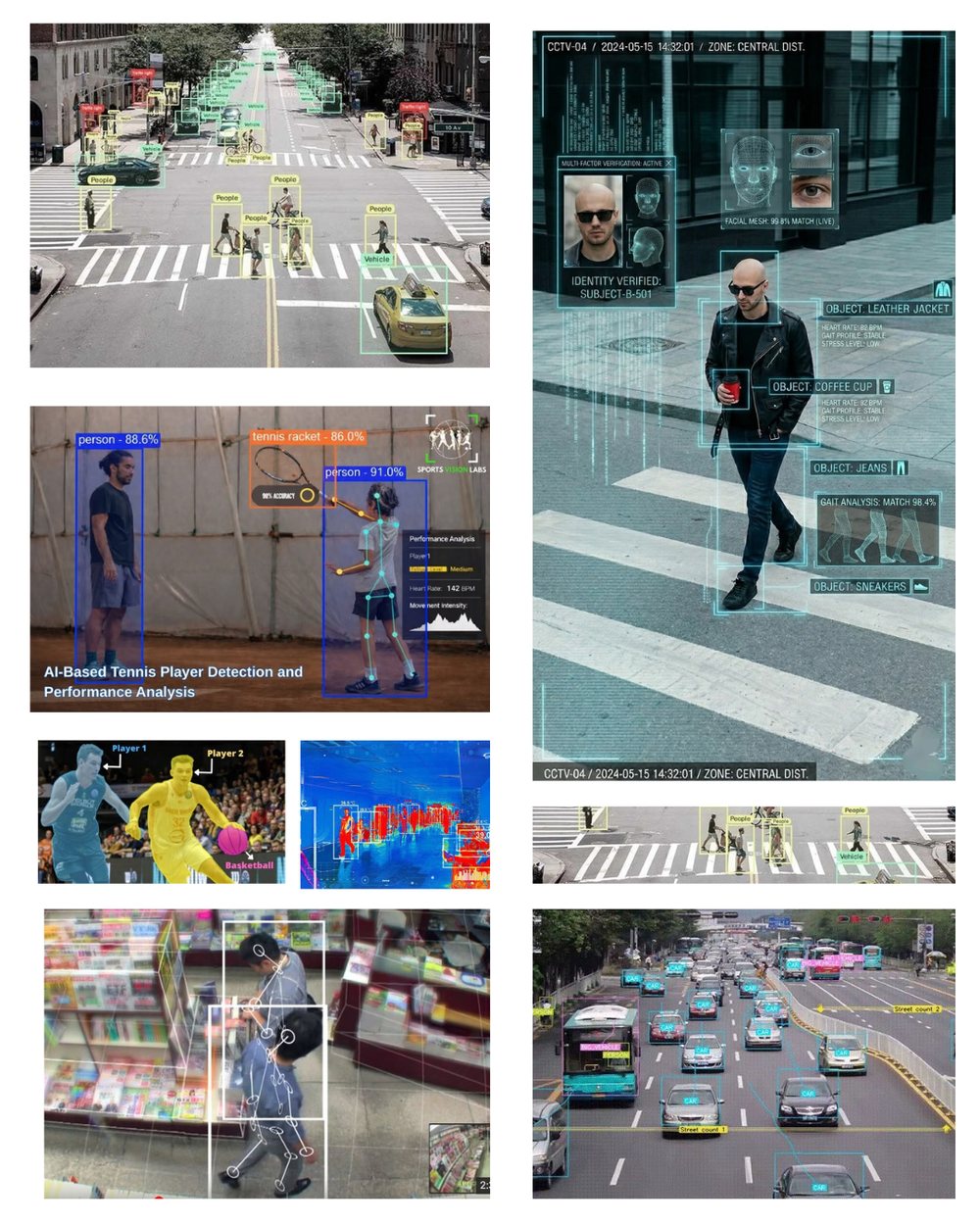
Data annotation involves labeling data, such as images or video footage, to make it understandable for AI algorithms. In the context of CCTV systems, this means tagging objects, people, and activities within the video feed. These annotated datasets are then used to train AI models, enabling them to recognize patterns, detect anomalies, and make informed decisions without human intervention.

AI, on the other hand, brings the power of machine learning and deep learning to the table. When integrated with annotated data, AI can analyze vast amounts of video footage in real-time, identifying potential security threats with remarkable accuracy. This integration transforms CCTV installation from passive recording devices into proactive security solutions.

Benefits of Integrating Data Annotation and AI in CCTV Systems

  1. Enhanced Threat Detection: AI-powered CCTV installation in Kenya can detect unusual activities and potential threats in real-time. For instance, they can identify loitering individuals, unattended bags, or unauthorized access to restricted areas. This proactive threat detection allows for immediate response, minimizing the risk of security breaches.
  2. Reduced False Alarms: Traditional CCTV systems often generate false alarms, leading to unnecessary panic and resource allocation. AI models, trained with annotated data, can differentiate between actual threats and benign activities, significantly reducing false alarms and improving the overall efficiency of security operations.
  3. Scalability: AI-driven CCTV systems can scale to cover larger areas without compromising on performance. This scalability is particularly beneficial for large businesses, industrial complexes, and public spaces in Kenya, where extensive surveillance coverage is required.
  4. Automated Monitoring: Continuous monitoring of video feeds by human operators is not only resource-intensive but also prone to errors. AI systems can automate the monitoring process, ensuring constant vigilance and freeing up human resources for more strategic tasks.
  5. Predictive Analytics: Beyond real-time threat detection, AI can also perform predictive analytics. By analyzing historical data, AI models can identify patterns and trends that may indicate future security threats. This predictive capability enables proactive measures, enhancing overall security preparedness.

The Future of CCTV Installation Services in Kenya

The integration of data annotation and AI in CCTV systems is poised to transform the landscape of security services in Kenya. As these technologies become more accessible and affordable, businesses and homeowners alike can benefit from advanced surveillance solutions tailored to their specific needs.

For security companies in Kenya, this presents an opportunity to offer cutting-edge services that address the unique challenges faced by their clients. By investing in AI-powered CCTV systems and leveraging annotated data, security providers can enhance their offerings, delivering superior protection and peace of mind with each CCTV installation services in Kenya.

Conclusion

The future of CCTV surveillance lies in the seamless integration of data annotation and AI. This powerful combination not only enhances the capabilities of traditional CCTV systems but also introduces a new era of proactive, intelligent security solutions. For those seeking CCTV installation services in Kenya, embracing these advancements is the key to staying ahead of evolving security threats and ensuring a safer environment for all.

29Jun

Image Annotation for Computer Vision

Image Annotation For Computer Vision

For any artificial intelligence project to be a success, the images used to train, validate, and test your computer vision algorithm plays a key role. To properly train an AI model to recognize objects and make predictions just as humans do, we thoughtfully and accurately label images in every data set.

The more diverse your image data is, the trickier it gets to have them annotated in line with all your specifications. This can end up being a setback for both the project and its eventual market launch. For these reasons, the steps you take in crafting your image annotation methodologies, tools, and workforce are all the more important.

Image Annotation for Machine Learning

What is image annotation?

In both deep learning and machine learning, image annotation is basically labeling or categorizing images through an annotation tool or text tools to convey data attributes that the AI model is training to recognize. When annotating an image, you’re basically adding metadata to a data set.

Image annotation is a branch of data labeling also known to as tagging, transcribing, or processing. Videos can also be annotated, either frame by frame or as a stream.

Types of images used for machine learning

Machine learning involves annotation of both images and multi-frame images e.g. videos. As earlier indicated, videos can either be annotated frame by frame or as a stream.

There are usually two data types used in image annotation. They are;

  1. 2-D images and video
  2. 3-D images and video

How to Annotate Images

Images are annotated using image annotation tools. These tools are either are available in the open market, freeware, or open-source. Depending on the volume of data on hand, the need for an experienced workforce to annotate data comes to play. Data annotation tools come with a set of capabilities that a workforce can utilize to annotate images, multi-frame images, or video.

Methods of image annotation

There exist four methods of image annotation for training your computer vision or AI model.

  1. Image Classification
  2. Object detection
  3. Segmentation
  4. Boundary Recognition

Image Classification

Image classification is a branch of image annotation that works by identifying the presence of similar objects in images across a dataset. Assembling images for image classification is also known as tagging.

Object Recognition/Detection

Object recognition works by identifying the presence, location, and number of either one or more objects in an image and accurately labeling them.

Depending on compatibility, we use different techniques to label objects within an image. These techniques include bounding boxes and polygons.

Segmentation

Segmentation annotation is the most complex application of image annotation. We use Segmentation annotation in a number of ways to examine visible content in images and decide if objects within the same image match or differ. There are three types of segmentation:

  1. Semantic Segmentation
  2. Instance Segmentation
  3. Panoptic Segmentation

Boundary Recognition

We can train machines to identify lines/boundaries of objects within an image. Boundaries can consist of edges from a particular object, topography areas shown in the image, or any man-made boundaries that appear on the image.

When accurately annotated, we use images to teach an AI model on how to see akin designs in unlabeled images.

We use boundary recognition to teaching AI models on how to identify international boundaries, pavements, or even traffic lines. For the eventual safe use of autonomous vehicles, boundary annotation will play a very key role to make it all possible.

How to do Image Annotation

In order to make annotations in your image data, you need a data annotation tool. And with the advent of AI, data annotation tools use cases have propped up all over the globe.

Depending on your project needs and the resources at your disposal, you can tailor-make your own annotation tool. If you take this path, you will need resources and experts to continuously maintain, update, and improve the tool over time.

Image Annotation Methods

Depending on your annotation tool’s feature sets, image annotation comprises the following techniques:

  1. Bounding Box
  2. Landmarking
  3. Polygon
  4. Tracking
  5. Transcription

Bounding Box

This technique world by drawing a box around the object in focus. This method works well for relatively asymmetrical objects e.g. road signs, pedestrians, cars, etc. We also use bounding boxes when we have less interest in an object’s shape and when there are no strict rules on occlusion.

Landmarking

Landmarking works by plotting characteristics in data. We mainly use it in facial recognition technology to detect emotions, expressions, and facial features.

Polygon

The polygonal annotation works by marking each of the highest points (vertices) on the target object and annotating its edges. For this reason, we use polygonal annotation when the object is of a more irregular shape e.g. houses, land, vegetation, etc.

Tracking

We apply tracking to tag and plot an object’s motion through several frames in a video.

A number of annotation tools have interpolation attributes that permit annotators to tag each frame at a time.

Transcription

We apply transcription when annotating text in an image or video. Annotators use this when there is different information (i.e. image and text) in the data.

How Organizations are Doing Annotations

Companies employ a blend of software, processes, and people to collect, clean, and annotate images. Generally, organizations have four options when selecting an image annotation workforce. The quality of work is dependent on how well the team is managed and how their KPIs are set.

Employees

This involves having people on your payroll, either part-time or full time. This allows you to mold in house expertise and be adaptable to change. However, scaling up when using an internal team may prove to be a challenge. This is because you take full responsibility and expenses in hiring, managing, and training workers.

Contractors

Contractors are freelance workers who train to do the work. With contractors, there is some flexibility in the event that you want to scale up. However, just like employees, you will take responsibility for managing the team.

Crowdsourcing

Crowdsourcing is an anonymous, make-do source of labor. It works by using third party platforms to reach large numbers of workers. Subsequently, the users on the platform volunteer to do the work described to them. With crowdsourcing, there is no guarantee for landing annotation experience and you are constantly in the dark with regard to who is working on your data. As a result, the quality will be low since you cannot vet crowdsourced workers in the same way as in-house employees, contractors or managed teams are.

Managed Teams

Managed teams are basically the outsourcing route. A managed team applies professionalism in both training and management. It works by you sharing your project specifications and annotation process. In return, the managed teams aid in scaling up when the need arises. As the team continues working, their domain knowledge with your use case is likely to improve with time.

Advantages of Outsourcing to Managed Teams

  1. Training and Context

To get high-quality data for machine learning, basic domain knowledge, and understanding of image annotation is a must. A managed team guarantees high quality labeled data. This is because you can teach them context, relevance, and setting of your data. Consequently, this guarantees that their knowledge only increases over time. Unlike crowdsourcing, managed teams have staying power and are able to retain domain knowledge.

  1. Agility

Machine learning being an iterative process, you may need to alter project rules and workflow as you validate and test your AI model. With a managed team, your ensured flexibility to integrate changes in data volume, task duration, and task complexity.

  1. Communication

With a managed image annotation team, you can create a closed technological feedback loop. This ensures seamless communication and cooperation between your internal team and annotators. In this way, workers are able to share insights on what they noticed when working on your data. With their insights, you can opt to adjust your approach.